The second wave of feminism took the United States by storm in the 1960s; women fought for equality in family life, employment, and education.1 During this time, female students at the University of Maryland were extremely underrepresented in sports, academics, and also , music and entertainment. At this time, women were looked down upon, and ultimately dehumanized on UMD’s campus. To create their own community, women decided to start clubs such as the Women’s Liberation Club, which rose on campus in the late 1960s, catching the attention of administration and male students. The Women’s Liberation Club coincided with the national development of the Women’s Liberation Movement as women across the country protested and advocated for their rights
Second Wave Feminism and the Women’s Liberation Movement

After first-wave feminism gained suffrage with the 19th Amendment, second-wave feminism (1960s–early 1980s) extended the goals of women’s activism beyond formal equality to include challenges to cultural, sexual, and legal inequalities. The Women’s Liberation Movement (WLM) focused on raising women to the same social status as men, revolutionizing the way women could function in society by challenging institutional barriers, redefining gender roles, and asserting women’s autonomy in every sphere: political, economic, domestic, sexual, and cultural.2. During the early 1960s, women were concentrated in low-paying jobs and earned significantly less than men for similar work. The WLM sought to transform this by demanding equal pay and employment opportunities through legislative reforms such as the Equal Pay Act of 1963 and Title VII of the Civil RIghts Act of 1964. Cultural expectations still centered women’s identities on marriage, motherhood, and domesticity and the WLM encouraged women to pursue education and careers, arguing that domestic responsibilities should be shared rather than solely the women’s duty.
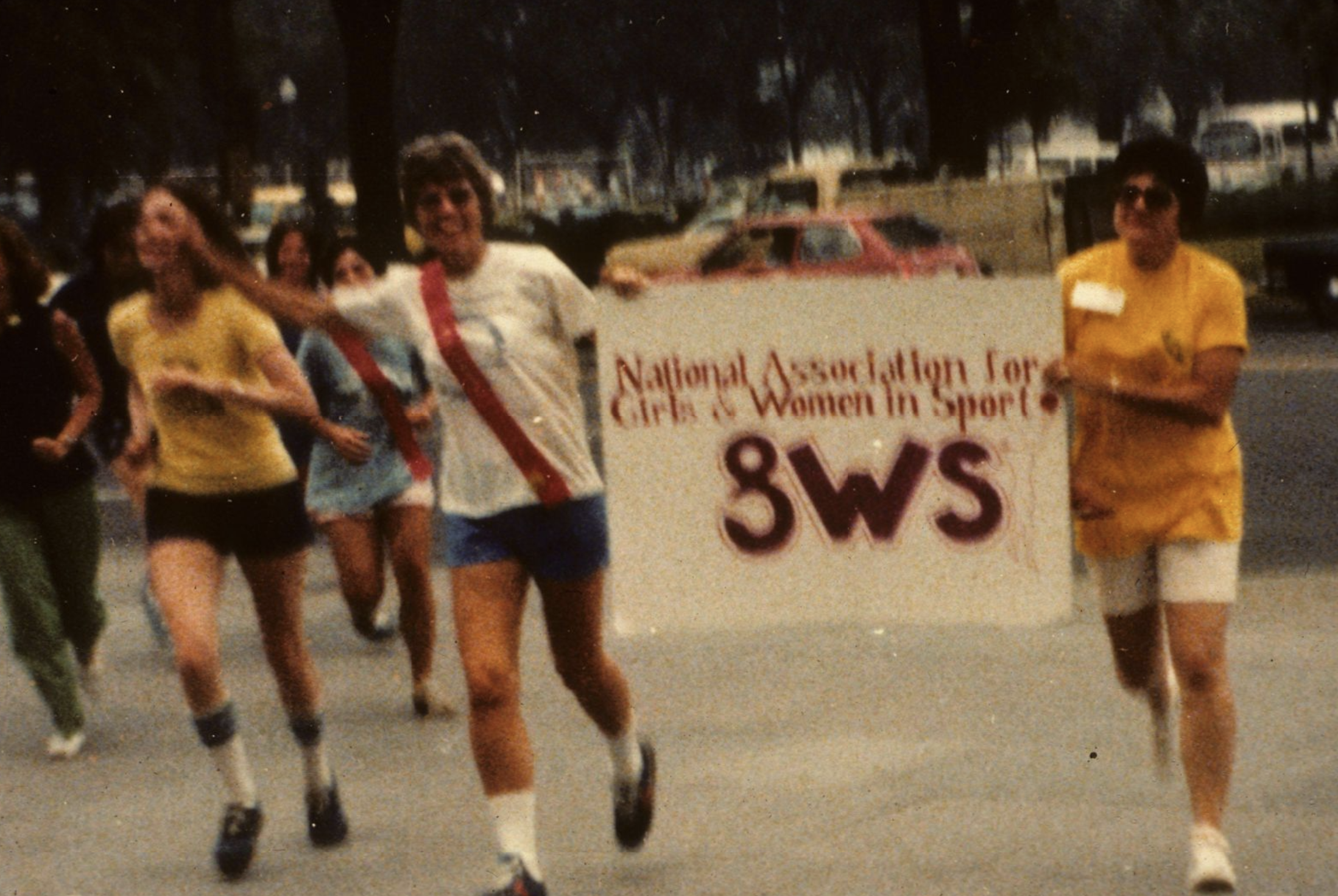
For a change to happen in society, feminists argued that women had to come together to prove that they were capable of power and independence.3 To make practical change and organize against sexism, feminists argued that women must rally together, regardless of other social differences.4. These national ideas of second-wave feminism and the WLM were also on UMD’s campus during the 1960s. The Women’s Liberation Movement reached the University of Maryland in the 1960s through second-wave feminism inspiring women’s groups such as the Women’s Liberation Movement Club to be created. Young women began to receive attention and praise from the public for advocating for their rights on campus by fighting against the regulations against women at UMD and the inequalities they faced in academics and athletics.

In 1969, 6 women stood outside Wicomico Hall auctioning off themselves for tasks such as cooking, cleaning, and sewing.5 Fortunately, only one woman was auctioned for $1.25 (today, $13.68) before the auction was shut down. The UMD Women’s Liberation Club (WLMC) protested this auction by bidding on the women themselves to prevent them from being sold to a man.6 Despite their fundraising intent, the women in this auction had conformed to societal standards that coded women as a commodity. Highlighting the sexualization women faced from men, men asked vulgar questions pertaining to sexual behaviors, revealing what they valued in women.7 This demonstrates how individual discrete actions can exemplify and reify an overarching social structure, such as the expectations on women. If it was not for the WLMC, women would have had even less of a voice and ultimately, less incentive to join the movement. While women’s fight for equality was part of a broader movement, the WLMC on UMD’s campus had influential efforts that contributed to advancements for female students.
Vivian Gornick, a prominent voice for the Women’s Liberation Movement and reporter for The Village Voice, wrote articles that captured the movement’s energy and complexity from a female perspective. The Village Voice became the hub for those who lived in New York City, primarily Counterculture youth and artists. Through The Village Voice, Gornick shared how her life had changed through the Women’s Liberation Movement, and used her own experiences to report on developments in the feminist movement.8 She shares how there was ignorance towards the WLM, specifically how men did not understand why there was a need for female equality and were confused about why women felt oppressed. Gornick explains how growing up in the 1960s without seeing women in powerful roles in policy making provided no sense of confidence or independence for herself or other women. She mentions the economic inequality in women and men’s income, along with the roles they commonly fill being less than those of a man’s; for example being a nurse, but never a doctor.
Harsh Scrutiny of Women
Even when women were involved in entertainment on campus, they received very minimal support and large amounts of criticism. It was difficult for women to rise to greater fame and respect in the patriarchal standards that were set in society.
Most critiques of women at UMD were from men who were not supportive of the shift of the social customs surrounding women; this also carried into the musical aspects of student life. Many theatrical and musical performances were dominated by male students, while women were mostly background characters. An article published in The Diamondback titled “And One for the Barn,” summarized a performance and in doing so, reveals how women were seen in comparison to men. Author Carl Tretter, states that there were seven men in the performance and only two women participated, therefore providing an example of how women were underrepresented in entertainment. Tretter shares his opinion on the women’s roles, declaring them as less interesting and relevant by saying all they contributed was, “..dingling bells and tapped tambourines among other things…”9 According to Tretter, the female singers in another ensemble,”…failed to reach the audience (literally), and Soprano Margaret Kalil continually flubbed her part.”10 Tretter’s phrasing shows the disrespectful approach men had to women not only as people alone but as musicians as well.

Women in the entertainment industry were on the rise to greater fame and respect in the 1960s. At the time, the existing patriarchal beauty standard for women molded them into the societal norm for how they should look. Criticism on women in the spotlight was was prevalent in the music industry. Male Diamondback writer Bob Levin, in an article about women in musical performances on campus, used his writing as an opportunity to demean women’s appearances and roles. Levin describes the female performers as “…torrid, sexotic, sensational, or eyeball filling.”11 He also describes how certain women that are in entertainment are “…definitely not beautiful and would look better in a fire fighter suit than their working costumes.”12 Levin’s Diamondback article was is a prime example of how it was normal for men to not see anything past a surface level appearance with a woman. Despite women engaging in more beneficial activities on UMD’s campus, men still only saw them from a physical lens. This feeds into the skewed societal standard men created for women to be modest, beautiful, and passive towards men.
In the 1960s, there was also a men-to-women ratio disparity on UMD’s campus. Some students thought that the WLM was a driving force that caused some academic classes to be solely women. Faculty and men generally had a different perspective, believing that the general rise of feminism caused a greater segregation of women and men on campus. The Diamondback article titled, “Men Hold Enrollment Edge Over Women by Three to Two,” provided a third perspective, that women still did not have equal enrollment opportunities as men.13 A male senior was quoted in the article stating that there was “nothing to worry about” when it came to men being enrolled at a higher rate than women, demonstrating how many men did not recognize a need for change.14

Many men did not understand why women felt like they were underrepresented in society and why they were fighting for their rights. Due to the established norm of women functioning within a traditional family, being a caretaker or subservient to her husband, it was difficult to shift the perspective on female roles. It was also expected for women to conform to specific roles in public by wearing modest clothing, meeting the beauty standard, and having a polite and agreeable demeanor. Second wave feminism encouraged women to resist these expectations. A 1969 Diamondback article titled “Denying the Spider Squasher,” argued in favor of those who felt they deserved to question societal norms.15 The authors gave Clement Haynsworth (President Nixon’s appointee to the Supreme Court, who was eventually rejected by Congress for his discriminatory actions) the epithet “Spider Squasher,” and disagreed with his opinions and values. The authors advocated for women on campus, affirming the right to pursue their path to equality. Other female students on campus were showing their frustration with the discrimination they were facing by “…flaming bras and picketing bridal fairs,” to prove that they were fed up with being sexualized and facing the traditional norm of ‘having’ to get married.16 Women were indisputably supporting women time and time again, encouraging one another to seek out and fight for their independence. Despite the social stigma around women being capable of performing, entertainment figures were still welcomed on campus. Although this seems like a stride in the right direction for women on campus, women performers were still not recognized in the way they should have been based on their national success and fame.
Ella Fitzgerald and Inequality
A prime example of how women were discredited compared to men is Ella Fitzgerald’s performance at the Cole Field House in October, 1961. For a woman in music who had earned 6 Grammys by this time (and who was becoming the first African-American woman to win a Grammy), Fitzgerald received very minimal recognition or gratitude for her performance in UMD press. Weeks after her performance, a small excerpt in The Diamondback thanked the Interfraternity Council for gifting 300 tickets to the Naval Hospital in Bethesda, MD.17 Another Diamondback excerpt had a very small analysis of Fitzgerald’s performance, mentioning two times that the audience turnout was significantly lower than expected, highlighting attendance issues. In addition, there was no praise towards Fitzgerald, just general statements about what songs she performed and a quote from the SGA president again addressing the low audience turnout.18

In contrast, another Black, yet male artist, André Watts, was invited to perform at UMD multiple times throughout the 1960s. Each time he returned he was advertised in The Diamondback.19 These promotions were often included approval and praise for Watts as an artist and a performer. The difference in treatment between how the UMD paper treated Watts and Fitzgerald as Black artists, suggests that gender was a cause for the discrimination faced by Fitzgerald. Women such as Fitzgerald were consistently disrespected in the music industry, despite their successes in their artistry. Fitzgerald’s membership in and support for the community of women directly affected her authentic representation in music; musical social groups are given a position in society based on community membership. This directly impacts the experiences of artists and audiences and creates a hierarchy within musical culture.20
Women’s Voices
Music is a way for people to express themselves, sustain social groups, and feel part of a shared community. Women being seen as less than in the music industry made them feel as though their art did not allow for them to fit into the community of their shared interest or allow them to feel welcome. To combat the exclusion of women, popular female singers produced songs reflecting their demands for equality.
Aretha Franklin released her song “Respect”to demand self-worth from her partner and other women. Franklin’s bold, powerful, and unapologetic delivery, particularly on the often-repeated word “respect” to communicate that women can speak with authority. The song’s tone sends a message that women’s voices matter, not just in lyrics but in emotional power. As Franklin sings the word “Respect,” the guitar strums louder as well as her background singers adding in “talk to me” and “give it to me.”21 This further emphasizes the message of a demand for female respect. Girls and women listening to this music engage the strong force the WLM was radiating throughout the country. Songs such as “Respect” represent why women deserved independence and respect from the music industry. The song became an anthem for the Women’s Rights Movement because its message “to give me the respect I deserve” captured exactly what women wanted socially and professionally.22 Women in the music industry connected with this, as they were often underpaid, undervalued, and silenced creatively. Aretha Franklin’s own version of “Respect” represents how she could express her true self by writing her own version. This coincides with women in general benefiting from having independence within the music industry. Men were controlling and monopolizing the music industry, but within the time period of the WLM, women started to gain independence from men in the industry that ultimately boosted their ability and confidence.

Women were extremely under appreciated and willing to fight for equality, despite the disapproval from many men. Some men were willing to support and give credit to successful women, which made strides for female equality. A female composer from Maryland, Vida G Brunner, was given dedication to a book of sheet music from Vincent Godfrey Bruns, a well-known poet. In the beginning of the book Vincent Godfrey Bruns gives credit to Vida G Brunner, calling on her in a time of need.23 It showed great importance during the time of second-wave feminism that a successful man in music was willing to credit a woman in his work, labeling her as successful as well.
It is extremely important to recognize the strides women have made to get where they are in the entertainment industry today. By examining sexist social structures and how women navigated them, we can better appreciate female performers and their talents, within our contemporary music industry. UMD was involved in fighting for women’s equality all across campus within entertainment, academics, and social life.
Bibliography
Primary Sources
“Andre Watts Solos at National Opening.” The Diamondback. October 14, 1964. Digital Collections, University of Maryland Libraries. https://digital.lib.umd.edu/student-newspapers-old/id/4093db0d-622f-4c4b-a8f9-cceeb0948df2?relpath=pcdm&query=%22Andre%20Watts%22
Associated Women’s Students. AWS Scrapbook. May 1957. Box 2. Series 1: Scrapbooks, 1957–1961 and 1964–1967. Records of Associated Women’s Studies. Special Collections and University Archives, Hornbake Library, University of Maryland Libraries.
Article Excerpts on Minnie S. Guggenheimer Performances. Box 5, Folder: “Minnie” Stadium Concerts. Series 2: Published Articles and Clippings. Lilla Belle Pitts Papers. Special Collections in Performing Arts, Michelle Smith Performing Arts Library, University of Maryland Libraries.
Tretter, Carl. “And One for the Barn.” The Diamondback. April 6, 1966. Digital Collections, University of Maryland Libraries. https://digital.lib.umd.edu/student-newspapers-old/id/601af54e-64b1-4078-a790-1b834e44779c?relpath=pcdm&query=%22female%20singers%22
Bourdon, David. “Women Invade the Sports World.” The Diamondback. February 25, 1969. Digital Collections, University of Maryland Libraries. https://digital.lib.umd.edu/student-newspapers-old/id/eb034994-9f1d-4e49-9776-15668460df0f?query=%20%22women%22
Brunner, Vida G. and Vincent G. Burns. “Thirteen Songs.” Sheet Music. 1966. Box 1, Folder 13. Series 2: Writings, 1966–1970 and undated. Vincent Godfrey Burns Papers. Special Collections and University Archives, Hornbake Library, University of Maryland Libraries.
Clark, Cheryl. “Liberated Coeds Protest.” The Diamondback. April 28, 1969. Digital Collections, University of Maryland Libraries. https://digital.lib.umd.edu/student-newspapers-old/id/1a46c643-5301-428b-a274-078c2d71e59d?relpath=pcdm&query=%22women%27s%20liberation%22
Clark, Cheryl and Steve Purchase. “Air Force Opens ROTC to Women.” The Diamondback. May 12, 1969. Digital Collections, University of Maryland Libraries. https://digital.lib.umd.edu/student-newspapers-old/id/6a3800c2-692a-42ba-ba5f-01fb45a6bc95?query=%20%22women%22
Clark, Cheryl. “Slave Auction Protested.” The Diamondback. October 30, 1969. Digital Collections, University of Maryland Libraries. https://digital.lib.umd.edu/student-newspapers-old/id/32d11d36-bd71-44f6-a7d6-dcd7b937ce0d?relpath=pcdm&query=%22women%27s%20liberation%22
“Ella Fitzgerald Caps Weekend.” The Diamondback. May 3, 1965. Digital Collections, University of Maryland Libraries.https://digital.lib.umd.edu/student-newspapers-old/id/3960c3a6-f2d9-48ab-b63b-dd151526ab18?relpath=pcdm&query=%22Ella%20Fitzgerald%22
Franklin, Aretha. “Respect.” Track 1 on I Never Loved a Man the Way I Loved You. Recorded January 10–February 26, 1967. Atlantic Records 8139, 1967.
Gornick, Vivian. “Women’s Liberation: The Next Great Moment In History Is Theirs.” The Village Voice. November 27, 1969. Box 3, Folder 2. Series 2: Subject Files. Dorothy Sucher Collection. Special Collections and University Archives, Hornbake Library, University of Maryland Libraries.
Gradet, Howard, and Barbara Ifshin. “Summer Attractions.” The Diamondback. May 5, 1968. Digital Collections, University of Maryland Libraries. https://digital.lib.umd.edu/student-newspapers-old/id/8df59519-ef82-4f22-8934-dee60774612c?relpath=pcdm&query=%22Diana%20ross%22
Hurwitz, Marilyn, and Ann Patterson. “Denying the Spider.” The Diamondback. October 27, 1969. Digital Collections, University of Maryland Libraries. https://digital.lib.umd.edu/student-newspapers-old/id/7d6e9d82-aace-442a-ae60-b6f200ec3cbd?relpath=pcdm&query=%22women%27s%20liberation%22
Lane, Terry. “Group Works for Birth Control Program.” The Diamondback. October 29, 1969. Digital Collections, University of Maryland Libraries. https://digital.lib.umd.edu/student-newspapers-old/id/fc8ce00b-1129-440a-8f3e-edda68f83a44?relpath=pcdm&query=%22women%27s%20liberation%22
Levin, Bob. “Female Form Still Active in Entertainment Business.” The Diamondback. November 13, 1961. Digital Collections, University of Maryland Libraries. https://digital.lib.umd.edu/student-newspapers-old/id/758059fb-28d4-438a-b4c6-798f72e591b8?relpath=pcdm&query=%22female%20singers%22
Lightman, David. “A Day in Annapolis.” The Diamondback. February 25, 1969. Digital Collections, University of Maryland Libraries. https://digital.lib.umd.edu/student-newspapers-old/id/eb034994-9f1d-4e49-9776-15668460df0f?query=%20%22women%22
“Men’s Glee Club.” In Terrapin, edited by C. Stuart Callison. Vol. 59. Undergraduate Student Body of the University of Maryland, 1960. Yearbooks. Digital Collections, University of Maryland Libraries.
“Men Hold Enrollment Edge over Women by Three to Two.” The Diamondback. September 23, 1966. Digital Collections, University of Maryland Libraries. https://digital.lib.umd.edu/student-newspapers-old/id/11df998c-ef31-4d92-b174-6ff50245d2b4?relpath=pcdm&query=%22music%22%20%22women%22%20%22girl%20groups%22
S.G.A Cultural Committee. “Andre Watts & National Symphony” Advertisement. The Diamondback. March 3, 1968. Digital Collections, University of Maryland Libraries. https://digital.lib.umd.edu/student-newspapers-old/id/b2cc3eeb-d3a3-4dd5-9a8f-578082ff3bda?relpath=pcdm&query=%22Andre%20Watts%22
“SGA Cultural Series Provides Diversity.” The Diamondback. September 16, 1964. Digital Collections, University of Maryland. https://digital.lib.umd.edu/student-newspapers-old/id/588e790d-1480-4882-87b1-bd4ca1891cad?relpath=pcdm&query=%22andre%20watts%22
Articles about Lilla Belle Pitts’s Career. in 1958–1969. Box 4, Folder: MENC-Possible Articles for Journal c. 1959. Series 2: Published Articles and Clippings. Lilla Belle Pitts Papers. Special Collections in Performing Arts, Michelle Smith Performing Arts Library, University of Maryland Libraries.
Quinn, Pat. “Backtalk for Readers.” The Diamondback. May 6, 1960. Digital Collections, University of Maryland Libraries. https://digital.lib.umd.edu/student-newspapers-old/id/b551cbbb-cbfd-4b3e-9bd1-4e16bbc6d7c4?relpath=pcdm&query=feminism
“Women Called Sex Slaves.” The Diamondback. September 26, 1969. Digital Collections, University of Maryland Libraries. https://digital.lib.umd.edu/student-newspapers-old/id/afbdd1d4-7c52-4e33-afa5-117fb1469d62?query=%20%22women%22
“Women’s Chorus.” In Terrapin, edited by C. Stuart Callison. Vol. 59. Undergraduate Student Body of the University of Maryland, 1960. Yearbooks. Digital Collections, University of Maryland Libraries.
WMUC Top 100 of the 1968–69 School Year. May 1967–1968.Box 3, Folder: Playlists, 1974–1987. Series 1: Administrative Records. WMUC Records. Special Collections and University Archives, Hornbake Library, University of Maryland Libraries.
Scholarly Sources
Citron, Marcia J. “The Canon in Practice.” In Gender and the Musical Canon, 190–193. University of Illinois, 2000.
Citron, Marcia J. “Canonic Issues.” In Gender and Musical Canon, 15–31. University of Illinois, 2000.
Cook, Sarah. “The Women’s Liberation Movement, Activism and Therapy at the Grassroots.” Women’s History Review 27, no. 7 (March 16, 2018): 1152-1168. https://doi.org/10.1080/09612025.2018.1450611
Ortner, Sherry B. “The Problem of ‘Women’ as an Analytical Category.” In Making Gender: The Politics and Erotics of Culture, 116–138. Beacon, 1996.
Turino, Thomas. “Habits of the Self, Identity, and Culture.” In Music as Social Life; The Politics of Participation, 1–18. University of Chicago Press, 2008.