In the Civil Rights Movement of the 1960s, the University of Maryland experienced a significant shift in ideologies of students and administration as tensions rose between the two groups over issues of racial diversity and inclusion. The administration held racial prejudices, which restricted genuine connections among students with one another, and failed to give all students equal opportunity. This also divided white and African American students, a divide shaped by the discriminatory beliefs upheld by the university’s leadership. In response, students began protesting the administration’s exclusionary policies; the students’ movement significantly influenced the campus music scene by adding more diverse musical experiences. By adding more diverse musical experiences. The rise of soul and jazz performances by Black artists brought new forms of expression and appreciation to the university, using music as both a sign to celebrate Black identities across campus, and as a form of protest against the racial segregation enforced by the UMD administration.
Overview of the Civil Rights Movement
The Civil Rights Movement of the 1950s and 1960s aimed to end racial segregation and discrimination against African Americans in the United States. Nationwide, led by activists, students, and organizations, the movement sought for equal rights under the law through protests, boycotts, and ultimately legislation. It was a turning point in American history, promoting justice, equality, and social change.
Ideologies of UMD Administration and Students
The landmark Supreme Court’s Brown v. Board of Education ruling in 1954 marked a key pathway for the desegregation of schools and universities; yet, schools across the U.S. were slow to implement the change it demanded. Desegregating schools was not only about creating a welcoming environment, but also about acknowledging the dark history that was damaging at every level of education.
UMD Administration
While Harry Clifton Byrd was president of UMD (1936–1954), he authored a paper with Francis M. Walters, a researcher in health and psychology, discussing topics ranging from democracy to the state of life for African Americans. To excuse the harsh conditions for the lives of those who are not white, Byrd pivoted to claims of English culture and that anything mixed-race within society was undesirable, concluding that segregation would continue to be a desirable practice for the foreseeable future. Byrd also considered how Americans of the 1930s-1950s were people of mixed origins; he viewed English blood as having a significant role in the U.S., providing the national language, and our “characteristics” or cultural traditions. He states that any cultural and behavioral limitations are due to structures that do not allow for non-white individuals, using this as a way to deflect personal responsibility for the administration’s own racial biases and prejudice.1 These biases were not only reflected in the ways of life but also embedded in the institutions that serve society. They reflect a larger system shaped by established traditions rather than one willing to confront and change a broken culture.2 Even though Byrd resigned as president in 1954, a sitting president at UMD holding separatist beliefs and not intending to create change, but rather intending to maintain the status quo, raises questions about the University’s efforts to create an inclusive environment for its students.


After Byrd, Wilson H. Elkins became president of UMD in 1954, remaining in the position until 1978. Both had similar ideologies about segregation. It is documented that before 1969, Elkins held racist views and actively resisted the integration of Black students into the university. At the time, the university was a majority white school and only a handful of people of color were enrolled. Meanwhile, Elkins had nothing to say about the racial imbalance of the University except to pass the buck to the secondary school system in Maryland. He said “it did not adequately prepare black students for the relatively stiff requirements of the University.”3 With only about 650 Black students out of roughly 32,000 total, and with white students largely indifferent or resistant to change, only sustained pressure and scrutiny across multiple levels of the university could dismantle the “Jim Crow” image.4
In the Fall 1969 semester, President Elkins, along with the University of Maryland’s administration, faculty, and students, finally established an equitable admissions policy and actively worked to eliminate academic and social discrimination. The university recognized the contributions and talents of minority students and staff. The ultimate goal was to build a reputation as an institution where every student could equally share their abilities, gain recognition among peers, and fully participate in campus life, and realize their educational potential through a diverse and inclusive range of academic opportunities.5 At the time, federal legislation of the Civil Rights Act of 1964 and affirmative action policies were pushing for universities to reform discriminatory admissions and hiring practices.
UMD Students
During the 1960s, UMD students navigated a tense campus climate where calls for Civil Rights clashed with the universities administration’s discriminatory policies. Leaders of the Student Government Association (SGA) amplified the Black Student Union’s (BSU) protests, which targeted injustices from home economic experience that excluded participants to challenges over the all-white cheerleading squad.6 The Campus Coalition Against Racism (CCAR) also held seminars on white racism however they turned out to be mostly for its own benefit.7The administration was hesitant to integrate UMD because Elkins believed that Black students would be more content at historically Black institutions. In 1965, the Washington Suburban chapter of the Congress for Racial Equality (CORE) protested at the university about segregation, and pointing out the lack of Black faculty, staff, and administrators, as well as lack of housing for Black students in College Park.8 George Murphy, CORE Member, was one of the first students to urge the administration of integration, along with representing the ideals of Black people at UMD. CORE was interested in helping the University broaden the scope and deepen the understanding of its recruitment program for Black students locally and nationally. Student organizers seeking to grow “Black Consciousness” at white colleges, universities, academies, and seminaries across the United States articulated this goal by demanding that the institutions consciously recruit more Black students.9

The Afro-American Newspaper group, led by Murphy, was the first and only Black newspaper group entirely student-run on campus. Since 1968, The Afro-American Newspaper group, now called The Black Explosion, has been offering information and pertinent updates about campus affairs and student life, especially pertaining to the Black community.10 The newspaper supplements reached over 50,000 black graduating students in universities, colleges, and secondary schools in the United States, the largest reach of any Black student-led newspapers in the country.11
The Civil Rights Movement led to new inspiring songs across multiple genres, which specifically resonated with Ralph Ellison, a Black American writer and literary critic who wrote about race, identity, and the Black experience in the United States. Ellison was a featured speaker at the UMD student convocation in 1974. The convocation was a redesigned version of the traditional President’s welcome to incoming freshmen. President Elkins declined an invitation to speak this year from the Fall Orientation Board (FOB). The FOB was concerned about the racial problems within public accommodations and institutions as Ellison’s book was on the freshman reading list, FOB chairman said Ellison was selected as being most relevant. Ellison emphasized the importance of language and sound in expressing cultural identity, noting that “no one could put up a sign saying this language [cultural expression] is not your language,”demonstrating a contemporaneous for how music and language were forms of communication that transcended racial boundaries.12 When white musicians began using African American slang in jazz and popular music, it became undeniable that African Americans’ had a major influence on mainstream culture and symbolized acceptance of Black creativity and expression. The acknowledgement of African American influence paralleled the University of Maryland’s efforts to become more progressive and inclusive by the end of the 1960s. 13
Racial Discrimination of Artists & Musicians
The philosophies and concepts of soul music reflect the collective of the Black community. The Civil Rights Movement and Black power movements addressed society’s unwillingness to combat adverse social, political, and economic conditions. Performers, musicians, and composers used music to address social issues; offering solutions for improvement and change.14Performers created a style that reflected and directed the aspirations of Black Americans, and musicians were optimistic for change and projected confidence in their art to create a better future.

Black music began to be embraced on college campuses in the early 1960s. However, jazz ensembles were not consistently pictured or promoted in the UMD yearbook as campus clubs or organizations. The 1964 UMD yearbook included musical groups on campus such as the Chapel Choir, Madrigal Singers, University Orchestra, Men’s Glee Club, Women’s Choir, and the Maryland Marching Band, most of which were predominantly composed of white students.15 The noticeable omission of jazz ensembles until 1967 reflected the university’s reluctance to fully acknowledge Black cultural contributions.16 The 1962 the Terrapin yearbook captured a rare example of inclusion with an image of a Black trumpet player in Maryland’s marching band.17 During the 1960s, few–if–any Black students were pictured in the senior class sections of the Terrapin. 18 This absence reflects the limited representation of Black students throughout the student body as a whole.

The yearbook’s representation of Black musicians in the 1960s tended to consist of jazz and blues artists performing at fraternity and sorority events, which were primarily white-dominated spaces. The inclusion of these artists in white-dominated spaces were mainly for entertainment purposes, rather than recognizing these performers and genres for their own cultural significance. For example, the 1967 theTerrapin included information about the internationally famous jazz and blues singer Harry Belafonte and his performance at UMD’s first Interfraternity Council Presents production in October 1967. The 1967 the Terrapin also recorded Black performers at Homecoming, which reflected the majority white student body’s musical interest at the time, as genres such as soul became more mainstream.19 While UMD students at the time appreciated the newly mainstream genres that were created by the Black community, the entire student body and the administration likely did not understand the cultural significance behind the music they appreciated, as the Black artists that created said music were rarely featured in theTerrapin and the Diamondback.
The music served social purposes related to identity and expression, while also challenging power structures and social inequities. Musical genres such as jazz, soul and gospel were heavily influential during the mid-1960s as forms of protest and Black pride.20 These genres’ functions of self-expression, and protest extend back to their roots in slave hymns. Many slave hymns had a cathartic effect on the performers, and spirituals were coded with hidden messages about maps, navigational strategies, and the underground railroad to help enslaved people escape toward freedom.21 Music acts as a social tool for emotional regulation and can be used as a powerful political tool to challenge social inequalities.22The music of Black America had long encapsulated the role of music in strengthening the personal integrity and cultural expression of individuals who were being dehumanized. As jazz, soul, and gospel music became mainstream across the United States, the role of music shifted to address political issues and social inequity on a national scale.
Impactful Soul & Jazz Performances on Campus
Ray Charles, who drew from gospel, jazz, blues, and country, was a national figure within soul music after his popularity increased in the early 1960s. Charles and his band toured extensively, performing nightly concerts, including concerts at The Howard Theatre in Washington, D.C about eight miles from UMD’s campus.23 The University of Maryland’s decision to feature Charles as an artist for its homecoming dance in 1960 was likely a reflection of the students’ music tastes, as the University was still segregated during this time. Yet, despite the significance of the event, it was undocumented from the 1960 theTerrapin yearbook, even though Charles was described as a “noted leader” in the Diamondback.24 The SGA hired him to perform at their homecoming, reflecting on how music at the time was often used as entertainment for white audiences, even as the contributions of Black artists were overlooked or minimized in records. The students’ response to Charles’s performance was overwhelmingly positive; tickets were sold out.25 The lack of documentation reflects the racial biases and the lack of acknowledgement of the growing prominence of Black artistry in a predominantly white university during the time period.
Charles openly discussed topics surrounding segregation, famously rejecting Jim Crow laws, and boycotting segregated venues. Charles refused to perform at a segregated venue on a college campus in Augusta, Georgia in 1961, recalling that “if I went against the grain, I was going to get sued, and also I knew I was going to lose, but it was worth it.”26 His powerful action led to a breach of contract lawsuit as well as a fine. The event would have segregated Black attendees to the balcony while white attendees would be on the dance floor. The venue eventually desegregated, and Charles performed there a year later. In a move of reconciliation, the state of Georgia made Charles’s song “Georgia on My Mind” the official state song.27

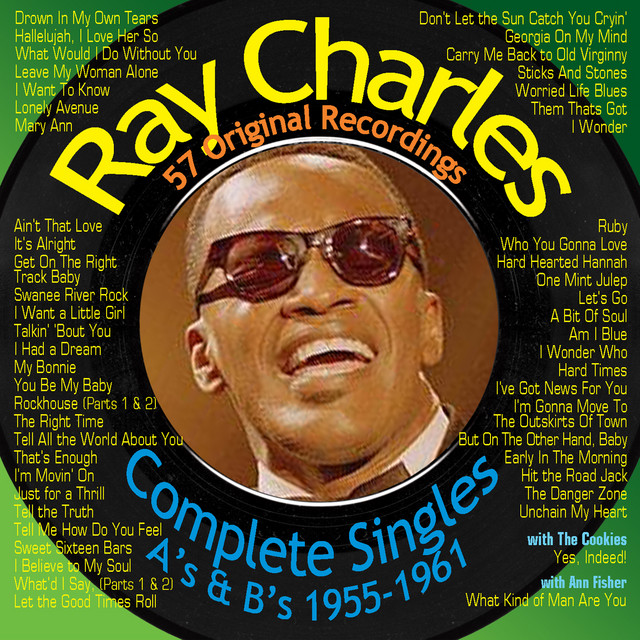
In addition to boycotting and forcing change at venues, Charles released a song called “Danger Zone” (1961) referring to the social and political turmoil of the early 1960s.28 With lines such as “the world is an uproar, the danger zone is everywhere,” Charles references the unrest and fear that Black Americans faced during apartheid segregation.29In using his music for protest and by refusing to play at segregated venues, Charles was actively challenging the racist ideologies. Someone with that level of fame can help change social policy because that fame gives them visibility, influence, and a large platform that reaches far beyond what most individuals have. Well-known individuals, like Charles can therefore shape public opinion and pressure those in power to create change. 30Charles ingrained habits, values, actions, as a Black artist living through segregation informed both his awareness of racial injustice and his refusal to comply with discriminatory systems.
The Dave Brubeck quartet helped develop the subgenre cool jazz, known for its relaxed melodies and improvisation. After Dave Brubeck returned from World War II, he formed a quartet that included African American bassist Eugene Wright and began touring universities. These universities invited the quartet to perform to meet student demand, fully aware that the group was racially integrated. However, some institutions demanded that Brubeck “bring his other white bassist” or risk being uninvited.31 Many of these universities feared that allowing an integrated group to perform would jeopardize their government funding. The group had scheduled 25 concerts in the South during the 60s; the quartet ultimately canceled 23 in protest of such discrimination.32 Brubeck’s commitment to integration, even if it was at the cost of canceled performances, highlights the connection between jazz and the broader struggle for Civil Rights. When the quartet performed at the University of Maryland’s 1967 homecoming—with Wright fully included—it signified the shift toward inclusivity during a time of social change. 33

The group’s most significant work related to the Civil Rights Movement was the 1969 cantata “The Gates of Justice.”34 A cantata is a short vocal composition combining solos, chorus, and instruments to tell a story, express emotion, or expressing grief or remembrance.35 The genre can serve both as a tribute to the deceased and as a way for communities to come together in shared remembrance and healing. The “Gates of Justice” was created in response to the Civil Rights Movement, with the emphasis on the tragic assassination of Martin Luther King Jr. The piece incorporates biblical texts and excerpts from King’s speeches – such as his well-known messages, “If we don’t live together as brothers, we will die together as fools” – to show the themes of love, unity, justice, and self-reflection as a nation.36 Through this blend of sacred and contemporary voices, the work calls on the nation to strive toward greater understanding and solidarity.
At the time, theTerrapin regularly included coverage of white artists such as Glen Miller Band and the Kingston Trio. 37 The Kingston Trio, a group of white folk musicians, used their platform to address issues to the Civil Rights Movement through songs like “Road to Freedom” and “Reverend Mr. Black.”38 In the song “Road to Freedom,” the Trio states “I’m gonna walk that road that we walked long before, many years ago, and we’ll walk a hundred more.”39 These lyrics suggest that the fight for freedom is not a new concept and the struggle must continue until real change is achieved. The phrase “walk a hundred more” indicates that the commitment to achieve freedom and equality is difficult, but it is worth the fight. Although they were not part of the Black community or experienced racist injustices firsthand, The Kingston Trio’s decision to sing about racial equality and moral courage reflected a growing awareness among white artists of the 1960s. The Kingston Trio helped bring conversations about justice and social change to mainstream (and often predominantly white) audiences who might not have otherwise confronted these issues. Their music demonstrated how white performers could use their influence to amplify and normalize the message of equality and contribute to the movement.
Both the Glen Miller Band and the Kingston Trio were commercially successful, musical groups that appealed to mainstream white American audiences. In contrast, jazz artists many of whom were Black were often covered less frequently and were associated with cultural innovation, social change, and pushed for racial equality. These differences in representation and access to venues reveals how much at the University of Maryland mirrored national racial attitudes. White artists were performing at bigger spaces on campus such as Cole Field House which holds 12,000 people meaning broader mainstream visibility and Black artists were performing at the Reckord Armory which holds 1,000 people.
The Lasting Impact on Campus
By understand UMD’s relationship with music from Black Americans, we can see how individuals could feel connected through shared cultural practices and experiences even without having a physical connection to other people. The idea of jazz became a shared aspect of identity amongst students at UMD and Americans that united listeners through a common emotional and cultural experience.40As time progressed to 1968, the coverage of Black artists became more extensive as Wilson Pickett and the Dave Brubeck quartet were featured in the 1968 theTerrapin yearbook, thus marking a change in attitude among the student yearbook editors, and most likely on campus as a whole.
During the Civil Rights era, there was a pivotal transformation in the campus culture and student identity. The ideologies between students and administrations over racial diversity and inclusion expose inequalities such as segregation and lack of representation. As the presence of Black soul and jazz student musicians and professional artists grew on campus. This cultural change helped bridge divides, allow students of all backgrounds to come together, and build a more change inclusive community for years to follow.
Bibliography
Archival Sources
Byrd, Harry C. and Francis M. Walters. On My Country’s Health or, A Primer of Americanism. Box 3, Folder 1. Series 3: Personal Affairs 1927–1970. Harry Clifton Byrd Papers. Special Collections and University Archives, Hornbake Library, University of Maryland Libraries.
“Dance Ticket Sales Prophesize Success.” The Diamondback. October 28, 1960. Digital Collections, University of Maryland Libraries. https://digital.lib.umd.edu/student-newspapers-old/id/429dabdf-1d09-47d8-816a-b6eed98319b3?relpath=pcdm&query=ray%20charles
Elkins, Wilson H. Proposal on Desegregation. September 29, 1969. Box 1, Folder 5. Series 10: Wilson H. Elkins, 1951-1971. Office of the President, University of Maryland Records. Special Collections and University Archives, Hornbake Library, University of Maryland Libraries.
Glen Miller Band Image, p. 286. In Terrapin, edited by C. Stuart Callison. Vol. 59. Undergraduate Student Body of the University of Maryland, 1960. Yearbooks. Digital Collections, University of Maryland Libraries.
Image of Harry Belafonte performing at UMD, p. 160, In Terrapin, co-edited by Ken Firestone and Marci Scherr. Vol. 66. Undergraduate Student Body of the University of Maryland, 1967. Yearbooks. Digital Collections, University of Maryland Libraries.
Image of Trumpet Player in Marching Band, p. 269. In Terrapin, co-edited by Janice Montgomery and John F. Rogers. Vol. 61. Undergraduate Student Body of the University of Maryland, 1962. Yearbooks. Digital Collections, University of Maryland Libraries.
Kingston Trio Ballads Performance, p. 283. In Terrapin, edited by C. Stuart Callison. Vol. 59. Undergraduate Student Body of the University of Maryland, 1960. Yearbooks. Digital Collections, University of Maryland Libraries.
Laroche, Marianne. “Ellison Welcomes New Students.” The Diamondback. September 10, 1969. Digital Collections, University of Maryland Libraries. https://digital.lib.umd.edu/student-newspapers-old/id/0929da4c-6108-4b5c-9867-a9ad4df1cc23?relpath=pcdm&query=music
Martin, Winston J and Beach, Robert. African American Advertisements in University Newspapers. July 1–3, 1969. Box 3, Folder 3. Series 1: Afro-American Newspapers, 1969. Division of Student Affairs Records. Special Collections and University Archives, Hornbake Library, University of Maryland Libraries.
McDonald, Beth. “Songs of the Underground Railroad.” Will the Circle Be Unbroken? The Sacred Music of the African American Diaspora Exhibit. Gerth Archives and Special Collections, California State University, Dominguez Hills. June 26, 2020. Accessed November 2025. https://scalar.usc.edu/works/will-the-circle-be-unbroken/songs-of-the-underground-railroad
Murphy, George R. Letters and Newspapers Issued to Expand Diversity in Colleges on June 24, 1969. Box 19, Folder 4. Series 1: Administration, 1947–1970. Division of Student Affairs Records. Special Collections and University Archives, Hornbake Library, University of Maryland Libraries.
“Noted Leader Ray Charles Jazz and Gospel Musician.” The Diamondback. October 28, 1960. Digital Collections, University of Maryland Libraries. https://digital.lib.umd.edu/student-newspapers-old/id/e456e189-070f-465c-b05a-8e441e6d6de1?relpath=pcdm&query=gospel
Parks, Steve. “University Can’t Shake ‘Jim Crow’ Image.” The Diamondback. September 10, 1969. Digital Collections, University of Maryland Libraries. https://digital.lib.umd.edu/student-newspapers-old/id/b58ca2e7-42e5-477c-b497-e188f32770fc relpath=pcdm&query=The%20diamondback%20College%20Park,%20Md,%201969-09-10
Performers at 1967 Homecoming, pp. 293–297. In Terrapin, edited by Lisa Taylor. Vol. 67. Student Government Association of the University of Maryland, 1968. Yearbooks. Digital Collections, University of Maryland Libraries.
Scholarly Sources
Anderson, Benedict. Imagined Communities. Reflections on the Origin and Spread of Nationalism. Verso, 2016.
Brackett, David. “Soul Music.” Grove Music Online. 2001. Accessed April 2025. doi:https://doi.org/10.1093/gmo/9781561592630.article.A2257344.
Kaemmer, John. Music in Human Life; Anthropological Perspectives on Music. University of Texas, 1993.
Orr, Lee. N. “Cantata.” Grove Music Online. January 31, 2014. Assessed November 11, 2025. https://doi.org/10.1093/gmo/9781561592630.article.A2256149.
Stephens, Robert W. “Soul: A Historical Reconstruction of Continuity and Change in Black Popular Music.” The Black Perspective in Music 12, no. 1 (1984): 21–43.
Turino, Thomas. Music as Social Life. The Politics of Participation. University of Chicago Press, 2008.
Woodard, Patricia. “Singing up to Freedom Land: Hymns, Spirituals, and Gospel Songs in the Civil Rights Movement.” The Hymn: A Journal of Congregational Song 67, no. 2 (March 2016): 7–15.
Additional Sources
Brubeck, Dave. The Gates of Justice. Written 1969. Premiered October 27, 1969, Miami, FL. Recorded 1969. Decca DL 710175, 1969.
Brubeck, Dave. Interview by Eugenia Zuckerman. September 23, 2003. Video of Interview. Milken Archive. youtube.com/watch?v=2z5ojCEy9SA&t=31s.
Charles, Ray. “The Danger Zone.” B-Side Single. Recorded 1961. ABC Paramount 45-POP935, 1961.
Charles, Ray. Interview by Camille O. Cosby. Los Angeles, California. October 16, 2002. Video of Interview. Visionary Leadership Project. https://www.youtube.com/watch?v=18qCyLJIswc&t=56s.
Charles, Ray. “Georgia on my Mind.” Track 2 on The Genius Hits the Road. Recorded March 25 and 29, 1960. ABC Paramount. ABC335, 1960.
The Kingston Trio. “Road to Freedom.” Track 2 on #16. Recorded March 4, 1963. Capitol Records ST-1871, 1963.
The Kingston Trio. “Reverend Mr. Black.” Track 1 on #16. Recorded March 4, 1963. Capitol Records ST-1871, 1963.
Library of Congress. “A Life of Global Impact.” In Rosa Parks: In Her Own Words Exhibition. December 19, 2019–May 31, 2022. Accessed October 2025. https://www.loc.gov/exhibitions/rosa-parks-in-her-own-words/about-this-exhibition/a-life-of-global-impact/1967-detroit-riot/.
National Archives and Records Administration. “Brown v. Board of Education (1954).” March 18, 2024. Accessed October 2025. https://www.archives.gov/milestone-documents/brown-v-board-of-education.
National Archives and Records Administration. “Voting rights Act (1965).” February 8, 2022. Accessed October 2025. https://www.archives.gov/milestone-documents/voting-rights-act.
National Association for the Advancement of Colored People. “The 1963 March on Washington; A Quarter Million People and A Dream.” Accessed October 2025. https://naacp.org/find-resources/history-explained/1963-march-washington.
National Museum of African American History and Culture. “Mourning the Death of Martin Luther King Jr.” Smithsonian. Accessed October 2025. https://nmaahc.si.edu/explore/stories/mourning-death-martin-luther-king-jr.
National Museum of African American History and Culture. “The Foundations of Black Power.” Accessed October 2025. https://nmaahc.si.edu/explore/stories/foundations-black-power.
National Museum of African American History and Culture. “SNCC: The Student Nonviolent Coordinating Committee.” Accessed October 2025. https://nmaahc.si.edu/explore/stories/sncc-student-nonviolent-coordinating-committee.
United States Senate. “Landmark Legislation: The Civil Rights Act of 1964.” Accessed October 2025. https://www.senate.gov/artandhistory/history/common/generic/CivilRightsAct1964.htm.
WTOP News. “University of Maryland William P. Cole Memorial Building (Interior).” Accessed December 2025. https://wtop.com/prince-georges-county/2017/08/basketball-football-newly-renovated-cole-field-house/.